
What is Net Zero and why is it the worst?
What is Net Zero?
Imagine you spend $100 one morning and then do something that afternoon that earns you $100.
Your bank account would look the same at the end of the day as it did at the start, even though there were both outputs and inputs during the day. That is: for all the activity, there’s been a “net zero” outcome. Net Zero is that, but for Australia’s entire carbon footprint.
In other words, Net Zero refers to achieving a balance between carbon emissions and carbon offsets so that, on “net,” a country’s carbon emissions will be zero.
One tonne of carbon emissions minus one tonne of carbon offsets equals net zero carbon.
Why pursue Net Zero?
Conventional wisdom is that human-induced “climate change” is caused by increasing carbon emissions. This “climate change” is warming the planet in ways that will present varying levels of danger and disruption – from rising seas to “extreme weather events” – depending on which model you believe. Therefore, many countries have decided reducing their carbon emissions is the way to stop “climate change” and avoid these dangers.
Some countries have decided setting the goal of reducing those emissions to “net zero” is the way to do this. Through organisations like the UN, countries including Australia, have signed agreements to pursue this goal and report back regularly on their progress.
What is Australia doing to achieve Net Zero?
This is where it gets complicated, but the short version is that Australia's Net Zero regime amounts to a series of expensive taxpayer-funded incentives, subsidies, and grants spread throughout all sectors of the economy, which aim at reducing carbon emissions in every way possible. It also includes a bunch of massive renewable energy infrastructure projects costing hundreds of millions of dollars, most of which uses technology made overseas, especially in China.
Ok, that seems fine; what’s the problem?
Let’s leave aside the massive costs, which tend to blow out, and consist of hundreds of millions being sent overseas, and just look at the energy fundamentals.
In the past, Australia’s energy grid was almost entirely made up of coal power. Coal is abundant in Australia and generates steady, reliable electricity. That’s why power prices were so low for so long, while cheap power means greater wealth and prosperity.
However, since “climate change” became a popular cause and the media and activists started demonising coal power as if we were living in Dickensian London, successive governments began to intervene by paying subsidies and incentives to bring more and more alternative sources of energy – like solar and wind – into the grid.
These energy sources are less reliable and consistent, and are unable to maintain the steady power necessary to keep the lights on 24/7 in an advanced economy like Australia’s. The more of these power sources there are in the grid, the more supply and demand has to be managed, which drives up the price of energy for you at home.
In short: it’s adding greater complexity and less reliability into the grid and that makes things more expensive for you. It also makes things difficult for industries that have high energy needs, like manufacturing, because the grid is no longer reliable and affordable enough to be viable.
TL;DR?
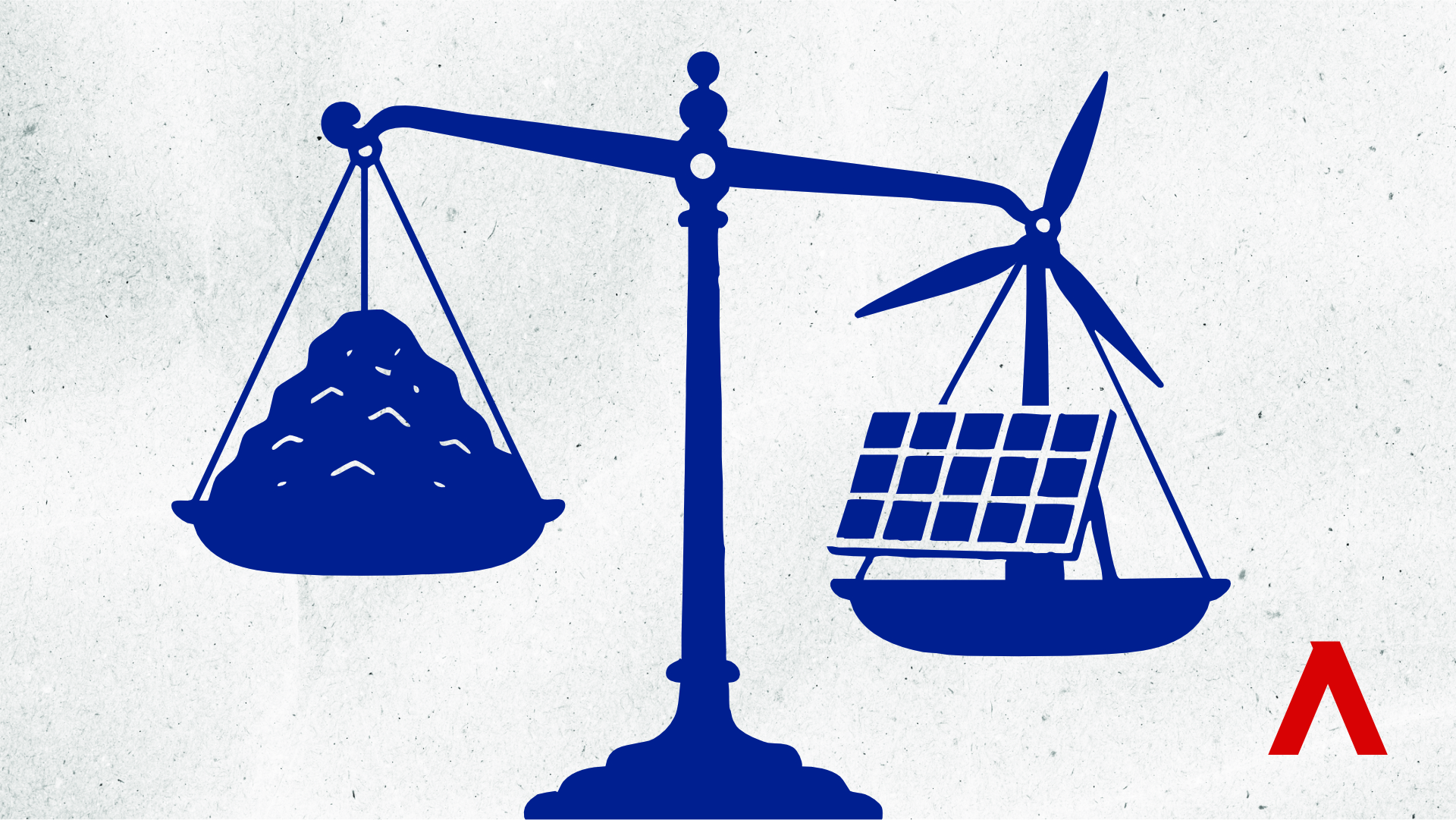
Labor’s Net Zero policy is effectively putting a thumb on the scale of every part of our economy to force it towards reducing carbon emissions; this raises the price of everything while making our energy grid less reliable.
How does it raise the price of everything?
One of the functions of the Net Zero regime is not just to incentivise lower carbon emissions, but to punish those who conduct higher carbon-emitting activities and make them more expensive. That cost flows on to consumers.
Take cars, for example. One part of the Net Zero suite of policies is mandating fuel efficiency standards on new cars. These add costs to the manufacturing of vehicles, while new compliance assurances incur additional costs that show up on the consumer price of the car. The government is also aggressively pushing for electric vehicle takeup, which are more expensive and crowd out cheaper alternatives for families.
Groceries are another thing to consider. Big food producers use a lot of power to grow and cultivate the produce that ends up in your local supermarket, and as power gets more expensive, so does the shelf price. In addition to all this, Net Zero policies have forced farmers to adopt lower emitting practices, which can make food production less efficient and more expensive.
But why do activists keep saying solar and wind are the cheapest forms of energy?
In a narrow sense they’re right, but it’s a misleading claim.
Imagine you were hiking in the mountains and drank water from a pristine stream; you would be telling the truth if you said mountain stream water is free to drink. However, if you were to say, “mountain stream water is the cheapest form of hydration,” that would be misleading, because although it’s free to drink while you’re in the mountains, the process of capturing, storing, and then getting that water to everyone in the country would be far from free.
In the same way, solar and wind are ‘free’ in the sense that the sun shines and the wind blows for free. But capturing that energy, storing it, transmitting it, managing it, and maintaining the infrastructure that does all of that costs a lot of money.
Crucially, the wind doesn’t always blow and the sun doesn’t always shine, so these energy sources may be cheap, but they’re intermittent and unreliable. To extend the analogy, mountain stream water might be the cheapest source of hydration when you’re standing at the stream, but it’s not much good if you desperately need hydration and there’s no stream within miles.
Advocates of renewable energy insist battery storage solves this problem, but no battery system exists right now that can store energy at the scale required to maintain the levels of power Australia needs; and even if it did, this would add yet another cost to these allegedly ‘cheap’ sources of energy.
So why are all the coal stations shutting down?
Another popular activist talking point is that coal power is unviable and will end up being phased out in the next couple of decades.
This is another point that is true in a sense, but fails to tell the whole story.
The unviability of coal has been a policy choice. We have abundant coal. So much so that we happily ship tonnes of it overseas for other countries to burn.
Australia’s remaining coal power stations are aged and need a lot of funding to stay operating. They have ended up this way because of deliberate decisions to demonise coal, push all funding into renewable energy, and overload the energy grid with unreliable renewables. This has resulted not only in reliable coal being crowded out by renewables, but has made energy production more expensive overall.
However, we still need coal to continue operating because renewables cannot deliver the baseload power used by Australians. So we’re in a strange position in which coal-generated power can do the job but isn’t doing enough of it to be viable long term, and renewables cannot do the job but are preventing coal from being used to do it.
You said earlier something about money sent overseas – what’s that about?
Oh, yeah. All the wind and solar power stations the government wants to build? None of that gets made in Australia. We use mostly Chinese-made solar panels and wind turbines. So, China burns all the carbon emissions themselves to build the parts we need, burns more carbon emissions to ship them here, then we assemble them in Australia to shave a little bit off our own emissions.
Meanwhile, solar panels and wind turbines have an even shorter lifespan and need more maintenance than coal plants do. You and I are on the hook for paying for maintenance for our electricity grid either way, and the choice is to figure out the coal question or just hand over billions to China every ten years or so as we continually replace renewable projects.
So what’s the solution?
The Labor/Greens/Teals of the world believe we just need to brute-force our way to Net Zero as quickly as possible, no matter what it costs, and everything will be fine. They say it will provide “certainty”.
Yet there’s no guarantee Net Zero will ever be achievable, given how much it will rely on technologies that don’t exist. Furthermore, to return to the whole point of Net Zero – stopping climate change – none of this will actually stop “climate change”. That’s a fact.
Australia contributes about 1 per cent of global emissions. Nothing we do will change the weather or temperature one bit. Especially not when China, India, and the United States, which account for about 40 per cent of emissions, are continuing to increase emissions.
Australia doesn’t exist in a bubble where the sacrifices we make and the price we pay will be repaid with fewer natural disasters, just for us. No, we live on a planet, and the whole world’s actions matter much more than just ours in isolation.
The solution is to dump Net Zero and stop messing around with complex expensive subsidies and incentives for renewables. It’s time to stop trying to adhere to nonsensical UN agreements and focus on building cheaper energy that works in the interests of Australians first.
Do you like this page?